Priority scheduling
Hazardous Tree Removal
Compromised trees over houses, driveways and play areas — assessed carefully, removed methodically, with the load controlled at every stage.
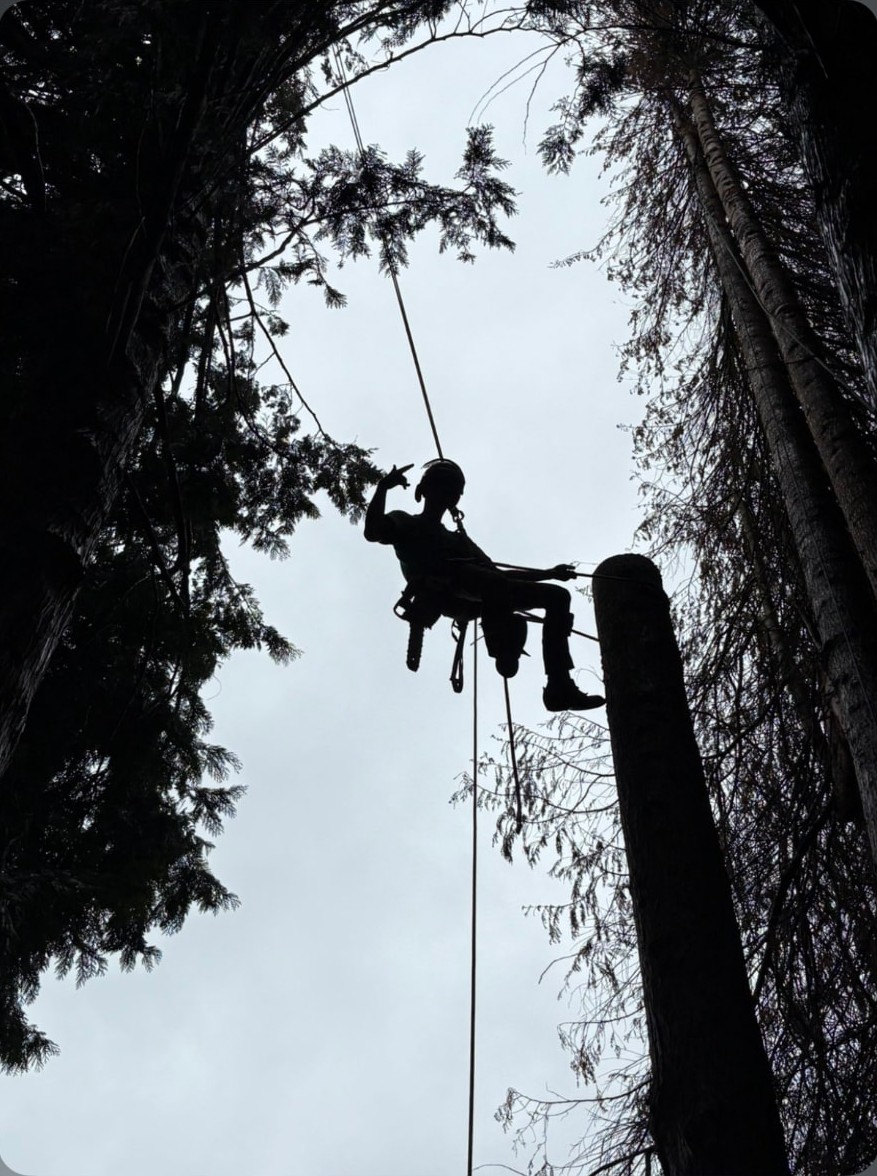
Why hazardous removals are different
A compromised tree can't be trusted to behave. Decay changes how fiber holds, a cracked union can fail under rigging load, and a lifted root plate means the whole stem may move. We reduce these trees from the top down in small, controlled pieces and keep loads off the weak sections.
What we look at first
Root plate and soil heave, trunk cracks and cavities, fungal fruiting bodies, included bark at unions, deadwood distribution, and the target beneath the tree. That assessment decides whether we climb, use a lift, or work it from the ground.
Saturated soil and Puget Sound wind
Our windstorms arrive after weeks of rain, when soil is holding the least. That combination is why healthy-looking firs go over in this region. If a tree has recently started leaning after a storm, treat it as urgent.
Common questions
- How do I know if my tree is hazardous?
- Warning signs include a new or worsening lean, cracks in the trunk, mushrooms or conks at the base, soil lifting on one side, hollow sections, and large dead limbs. If you see any of these over a structure, get it looked at.
- My tree leans — does it have to come down?
- Not always. A tree that has grown with a lean is often stable; a tree that recently started leaning is not. We assess the root plate and trunk before recommending anything.
- Do you handle trees near power lines?
- We handle service-drop clearance and rig away from lines. Work on primary utility conductors has to be coordinated with the utility, and we'll tell you when that's the case.
- How fast can you get out to look at it?
- For a tree that's actively threatening a home, call us — hazardous assessments get priority over routine scheduling.
Get a free, no-pressure estimate
Send a photo of the tree and we'll give you a straight answer on scope and price.